
I came across an article from CoStar, commercial real estate’s primary data source, and it confirmed what most of us in the business already knew deep down — Sacramento’s rental market finally ran out of gas.
For a few years, landlords were driving Ferraris while renters were peddling beach cruisers. But gravity eventually wins, and the market has started coasting back toward reality. Sacramento rents ran faster than incomes from 2020 to 2024, and the market was eventually going to correct itself.
Sacramento Rents: Time to Call the Turn
According to CoStar, rents fell 0.7% in October, bringing the average asking rent to about $1,850 per month — the biggest month-over-month decline in five years. Rents have slipped roughly 1.5% since June, and annual rent growth just turned negative (-0.7% YoY).
The Culprits aren’t mysterious:
Supply — Over 8,200 new market-rate units have opened across the region in the past three years, the largest three-year burst this century.
Demand — Renters are more cautious, household budgets are squeezed, and new lease-ups are handing out concessions like Halloween candy.
Submarket Highlights
North Sacramento / Natomas: Down ~1.2% month-over-month, now averaging just under $1,900. Annual growth flipped negative.
Roseville / Rocklin: Off ~1.3% month-over-month, averaging ~$2,175. No surprise there — supply finally caught up with demand.
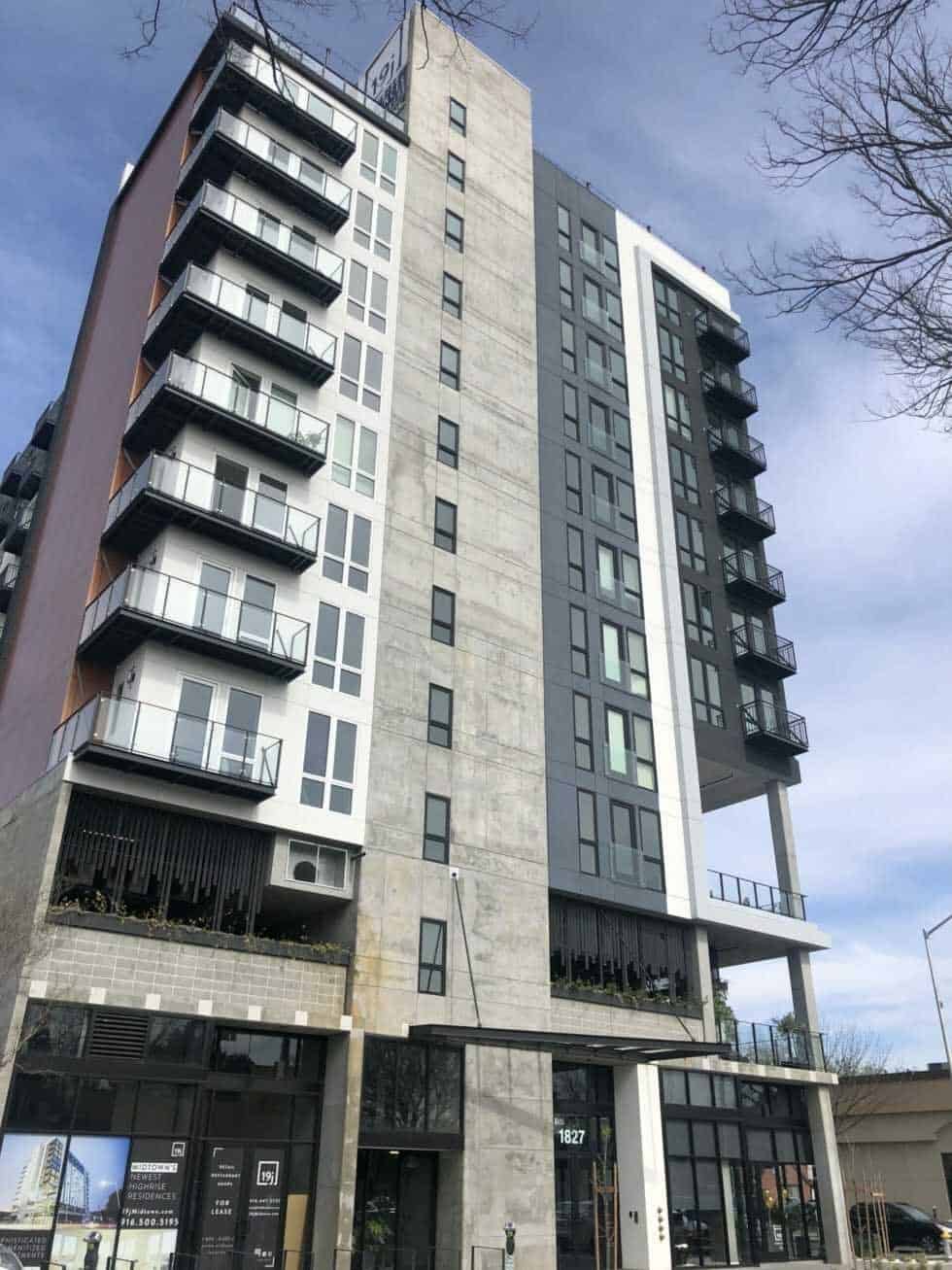
Downtown Core: Down ~0.6% month-over-month to around $1,800. But that’s a blended number. Roughly 3,300 new units have opened since 2022, many of which are high-end, priced at $2,100 and above, and several offer up to three months of free rent to stay competitive.
Class B (mid-tier) properties took the most brutal hit (-0.8% MoM), while Class A luxury slipped a more modest -0.1%. Either way, pricing power is fading fast.
Rents vs. Incomes – The Scorecard
Here’s where the rubber meets the road — or in Sacramento’s case, where the rent check meets the paycheck.
According to RentCafe, the average rent in Sacramento is about $1,921 per month (roughly $23,052 per year). The median household income sits near $83,750 per year.
But let’s be honest — nobody takes home that full number. After you deduct about 25% for taxes, the take-home pay drops to roughly $62,800.
That means the average household is spending around 37% of their after-tax income just on rent – and that’s before adding utilities, parking, internet, or the occasional splurge at Zócalo.
For anyone earning below the median, that percentage easily creeps past 40–45%. In other words, completely out of tune with what local incomes can sustain.
That’s why this correction wasn’t a question of if, but when.
Concessions Are Back in Force
Roughly a third of all properties surveyed by CoStar are now offering incentives — everything from “look-and-lease” specials to two or three months free rent. Even stabilized assets are cutting deals to compete with new construction.
So while average asking rents hover near $1,850, effective rents (what tenants actually pay after concessions) are notably lower. Expect that pattern to hang around well into the 2026 leasing cycle.
When the Numbers Stop Penciling
There’s another layer to Sacramento’s rent correction — the development pipeline itself is cooling under pressure from construction costs and high interest rates. For several years, it seemed every vacant infill site was destined for apartments. Not anymore.
Today, land prices have fallen sharply, and many sites that looked promising in 2021 or 2022 are now just sitting there, waiting for the math to make sense again. Some have been on the market for two or three years without movement. In many cases, the deals that still pencil have shifted from “build-to-rent” to “build-to-sell.”
Case in point: I marketed a three-acre parcel in 2022 for nearly $120 per square foot – right as rates started their climb. Fast forward to 2025, and that same site finally traded hands for about $85 per foot, with the developer now building for-sale townhomes instead of apartments.
That’s the reality check: when your cost of capital doubles and construction pricing doesn’t blink, the project pro forma starts coughing. Until rates come down or rents rise again (which seems unlikely in the near term), market-rate apartment development will remain stuck in neutral — and that will shape supply for years to come.
My Take: The Market’s Simply Normalizing
This isn’t a crash — it’s a reset. Rents outpaced incomes, and the market finally called a timeout.
For landlords, this means focusing on effective rent, renewal capture, and tenant retention rather than relying on unrealistic growth assumptions. For renters, it’s a welcome respite after a long, uphill sprint. And for those of us watching from the brokerage side? It’s another reminder that supply, demand, and fundamentals always win – no matter how hot the market appears.
“Sacramento rents ran faster than incomes from 2020 to 2024; today’s softening is just the market catching its breath.”