

Owning will cost more than leasing. That doesn’t necessarily make it a bad idea.
Downtown Sacramento suddenly has something on the horizon it has rarely had in meaningful supply: office condominiums.
Individual floors are for sale at 700 L Street. The owner of 830 K and 1130 K Street is pursuing condo maps to sell floors separately. And the recent sale of Suite 204 at 1231 I Street gives us an actual transaction, not another brochure.
Office condominiums occupy a peculiar corner of commercial real estate: the benefits of ownership, control, permanence, equity, protection from rent increases, combined with the pleasures of a homeowners association, where the roof and elevator belong to everyone and eventually develop opinions.
The argument for ownership is legitimate: why keep paying rent when an organization can own its office, reduce mortgage principal and eventually occupy the property debt-free? The answer is that, under current market conditions, owning one of these condominiums will probably cost more than leasing comparable office space, particularly during the early years.
That doesn’t make buying a bad decision. It means the buyer must value control, stability and long-term equity enough to pay a premium for them.
A Good Plan With Terrible Timing
Bauen Capital purchased 830 K Street and 1130 K Street in 2019 as opportunity-zone investments, planning to renovate the historic buildings and lease space to state agencies and other Capitol-oriented tenants.
Then COVID arrived.
State employees went home, office utilization fell to about 40%, and tenant demand Bauen expected largely disappeared, not because the owners misread the location, but because they failed to anticipate a pandemic, which, in fairness, most 2019 business plans also missed.
By the time the buildings were ready to compete for tenants, nearly every assumption behind the projects had changed: costs and insurance had risen, and interest rates had moved the wrong way. The annual average 10-year Treasury yield was approximately 2.14% in 2019. In July 2026, it was trading around 4.70%. The SBA 504 20-year effective rate averaged about 4.00% in 2019 and is now 6.20%.
Converting the buildings into condominiums is a rational response: rather than finding one large tenant or selling a partially vacant building, Bauen can appeal directly to owner-users who want to control their offices. The strategy makes sense. The prices still have to make sense.
1231 I Street: Condo Sold
The recent sale of Suite 204 at 1231 I Street is the best evidence we have of owner-user demand. The California Psychological Association sold the 3,331-square-foot condo to the State Building and Construction Trades Council of California for $895,000 – about $269 per usable square foot – financed with a $600,000 loan. The seller no longer needed it, since most employees now work remotely – a line that could be engraved on several downtown office building entrances. It took about 18 months to sell.
700 L Street
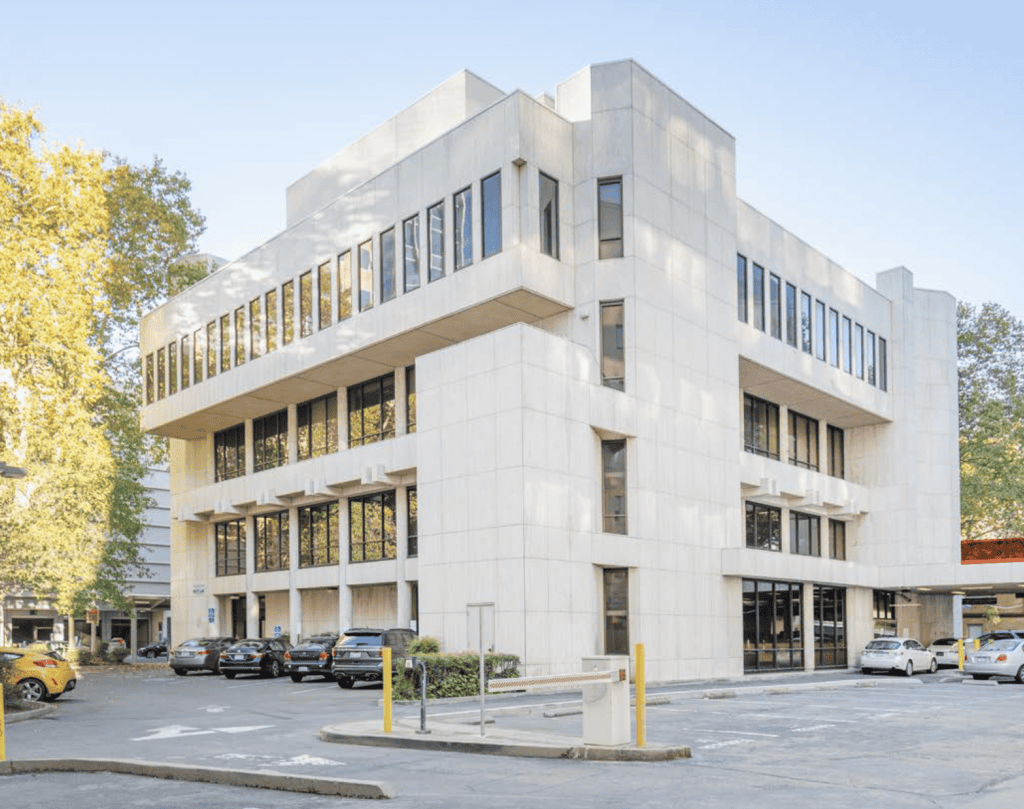
Of the four properties, 700 L Street already has a condo map, with proposed units and asking prices. The building has sat vacant for a long time, and it shows. Frankly, it doesn’t look like the seller is really motivated to sell.
The building totals approximately 23,546 square feet across three floors. Upper floors are priced at $425 per square foot, including a $125-per-square-foot improvement allowance. That’s not a finished office – it’s a shell plus an allowance, so the implied shell value is closer to $300 per square foot, and how far the allowance stretches depends on the tenant’s design and overruns.
The offering memorandum’s ten-year lease-versus-purchase analysis calculates gross ownership payments of $4.02 per square foot monthly versus $4.21 for leasing, then deducts principal reduction, appreciation and depreciation to claim a net cost of $1.64 and savings over $1.7 million over ten years. Seems pretty dubious to me.
There’s nothing improper about counting equity, appreciation, and depreciation; those are real benefits. They are not, however, monthly cash savings: the bank still expects the mortgage payment, the association dues, and property taxes. The only way you realize appreciation is if you buy it right, and appreciation only appears when you sell the condo.
830 K Street
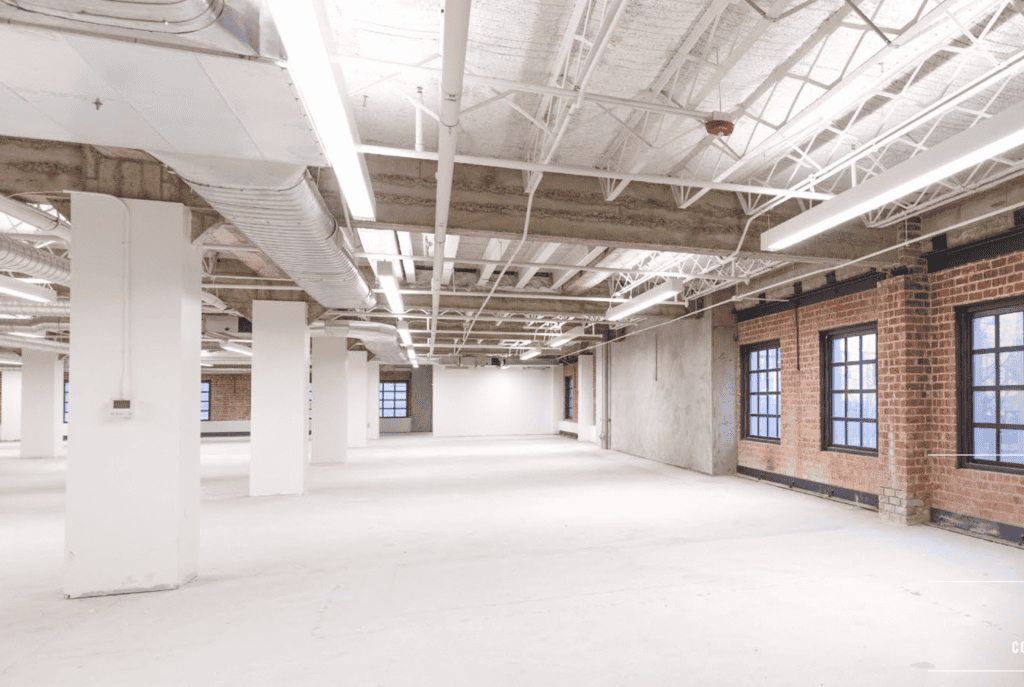
830 K Street may be the most visually distinctive property of the group. The former Montgomery Ward building has been seismically upgraded into creative office space with exposed ceilings, with typical floors around 12,600 to 12,766 square feet. The proposed condo map would sell the second, third and fourth floors separately, with a rooftop penthouse and terrace exceeding 6,000 square feet.
For the right buyer – an association, lobbying firm, law firm or corporate headquarters – the building is compelling: an entire renovated floor near the Capitol and light rail. But the problem isn’t the building – it’s the number of organizations that need 12,000 square feet, have the down payment, can qualify for financing, and want to commit for 15 or 20 years.
Ownership has indicated floors may eventually be divided into smaller condominiums if demand supports it, widening the buyer pool but requiring shared corridors, HVAC separation and metering.
No pricing has yet been published for 830 K Street. Until it is, the property is an interesting concept rather than an underwritable acquisition.
1130 K Street
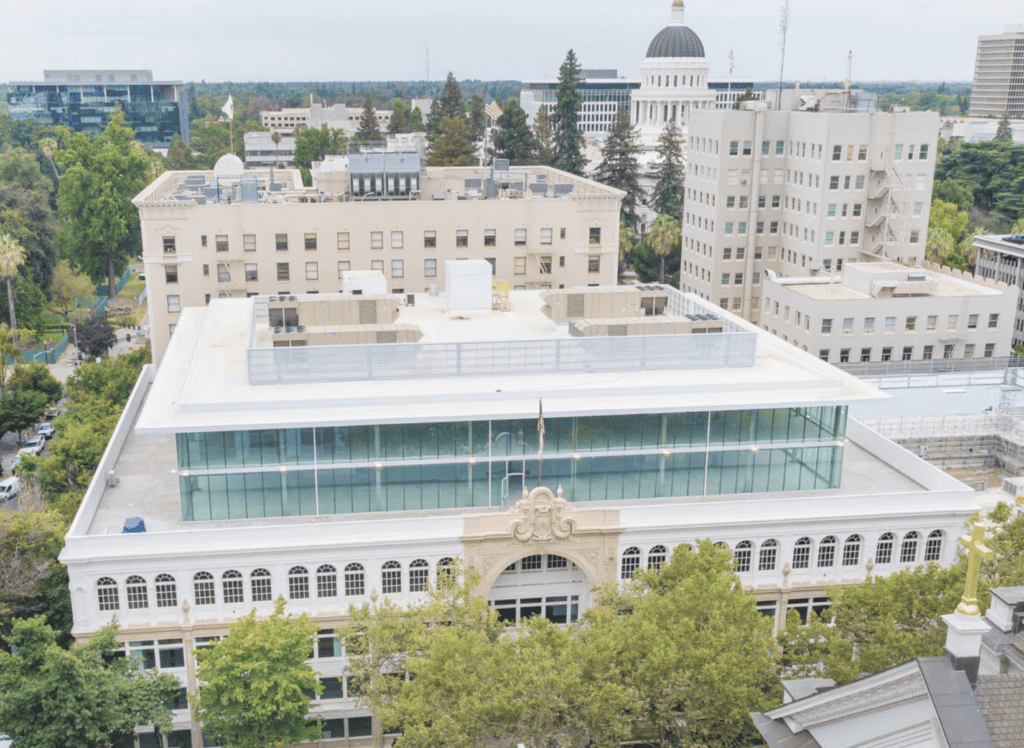
1130 K Street is the most ambitious proposed conversion. The former Weinstock’s department store has undergone a top-to-bottom renovation, with floor-to-ceiling glass, LEED Gold upgrades, showers, bicycle storage and a fitness center.
The floor plates are large – 29,117 to 32,043 square feet on floors three and four, and roughly 20,000 square feet on the newer fifth and sixth floors, which lease at $3.25 per square foot versus $2.65 below. The ceiling heights are closer to 8 ½ feet, but not as bad as the ceiling heights featured in the movie “Being John Malkovich.”
For an organization that expects to remain near the Capitol for decades, buying a floor at 1130 K Street could make strategic sense. For a business still figuring out how many employees come in on Tuesday, buying 30,000 square feet is an expensive way to resolve that uncertainty.
The Right Question
The traditional ownership pitch asks: why pay rent when you can own?
The better question is: how much more are you prepared to pay for control, and how long are you prepared to own the property?
Ownership requires a down payment, closing costs, taxes, insurance, dues, and a willingness to absorb special assessments and resale risk, converting liquid cash into a highly specialized asset. Leasing offers no equity, but it preserves capital and flexibility – a tenant can expand, contract or leave at term’s end. An owner must find another buyer, and commercial condominiums lack the emotional audience that exists for houses. Nobody walks in and announces, “This is where I want to raise the children.”
The office-condominium plans at 700 L, 830 K and 1130 K Street are thoughtful responses to a downtown market that changed dramatically after these investments were made. But these properties will not sell because ownership is cheaper than leasing. In most cases, it won’t be. They will sell to organizations that value permanence and long-term equity. For everyone else, leasing seems to work, which, like renting a boat, allows you to enjoy the experience while someone else worries about the maintenance.