
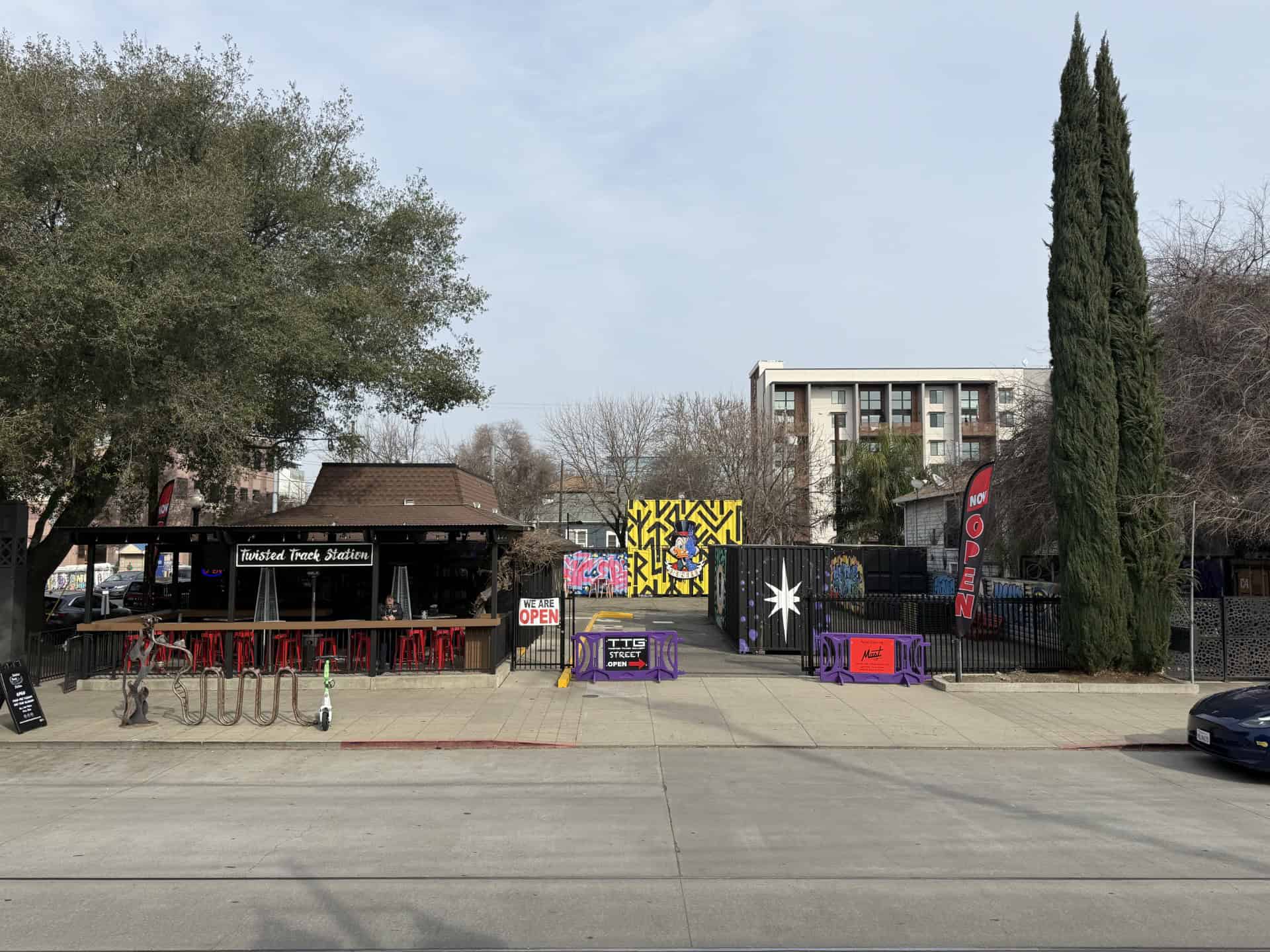
What’s Next for 1201 R Street?
A rare covered-land opportunity has emerged in the heart of Sacramento’s R Street Corridor a 14,810 square foot assemblage that combines immediate cash flow with exceptional development potential, 1201 R Street.
The property comprises two contiguous parcels: a full-service restaurant (Twisted Track Bar & Grill) fronting R Street and an adjacent duplex, generating approximately $11,000 in monthly income while positioned perfectly for redevelopment.
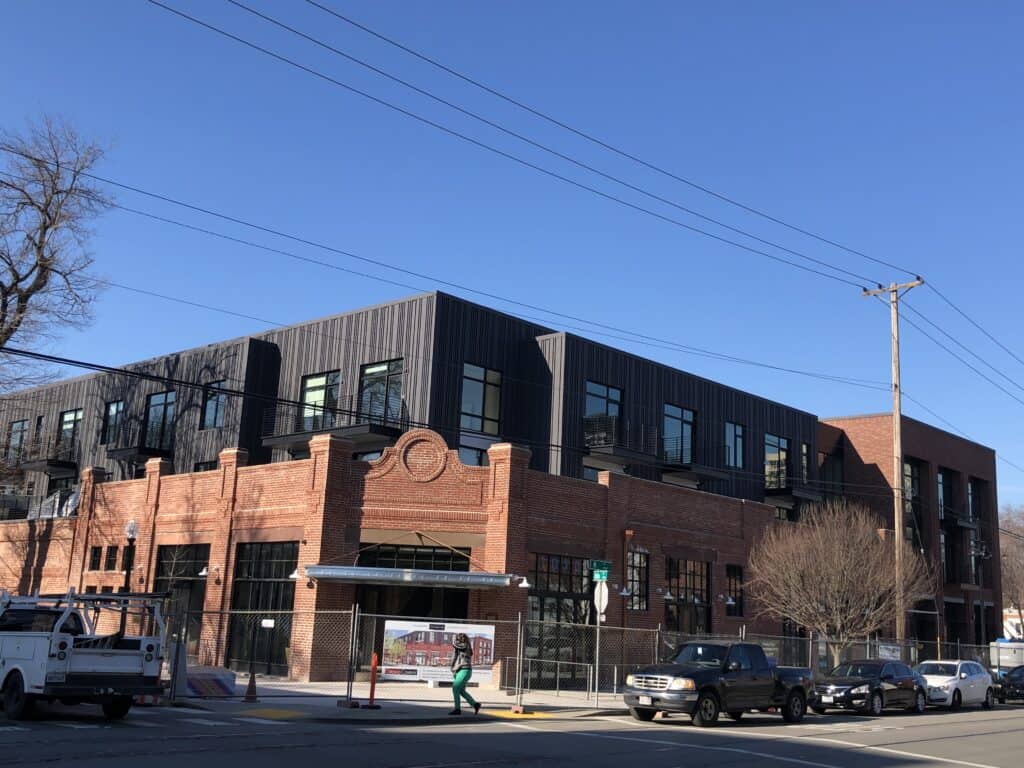

Located between 12th and 13th Streets within the R Street Corridor Historic District, this site sits in one of Sacramento’s most dynamic mixed-use neighborhoods.
The corridor has transformed from its 1855 rail and industrial origins into a thriving destination of restaurants, galleries, creative offices, and new residential developments. Major projects like the 134-unit Sakura at 16th & T Street and the 241-unit Monarch at 805 R Street are pumping hundreds of new residents onto these sidewalks.
The site’s RMX-SPD zoning allows for remarkable flexibility: FAR ranging from 0.3 to 8.0, heights up to 90 feet, and no minimum parking requirements thanks to AB 2097 transit-oriented provisions. The location offers quarter-mile access to light rail, walking distance to the State Capitol and downtown employment, and proximity to Golden 1 Center and the Convention Center. With the 2040 General Plan set to remove density caps entirely, the development potential becomes even more compelling.
What are the possibilities?
What do you think would pencil at 1201 R Street?
A. Hotel
B. Market-rate apartments
C. Condos
D. Mixed-use
E. Office
City staff provided input and confirmed that while an FAR of up to 8.0 is theoretically supportable if a project meets applicable design guidelines through Site Plan and Design Review (SPDR), the configuration and context of this particular site make a full 8.0 FAR buildout unlikely from a constructability standpoint. Staff recognizes that realistic, high-quality mixed-use is supportable at this location and that the city’s policy environment strongly favors infill development in established corridors.
Anticipated 2040 General Plan Changes
The City of Sacramento is actively implementing the 2040 General Plan, which includes amendments to Title 17 that will remove maximum density standards from multi-unit and mixed-use zones. Once adopted (anticipated early 2027), the formal 100 du/acre by-right cap will be eliminated, and development on this site will be governed solely by:
- Minimum density of 33 du/acre
- FAR band of 0.3–8.0
- Height limit of 90 feet
- Design and historic compatibility standards
This regulatory evolution meaningfully increases the long-term development potential of the site and eliminates one of the key discretionary barriers for high-intensity mixed-use programs.
Corridor Precedents
Recent approvals along R Street and in the Central City demonstrate the city’s willingness to support higher density and height deviations where design quality is demonstrated:
- 15 Q Street – 8-story mixed-use building with ground-floor commercial and 73 residential units on 0.44 acres, approved with density exceeding standard maximums and height deviations through CUP and design review
- Monarch at 805 R Street – 241-unit affordable housing mixed-use development currently under construction, demonstrating market acceptance of substantial urban infill.
Development Potential
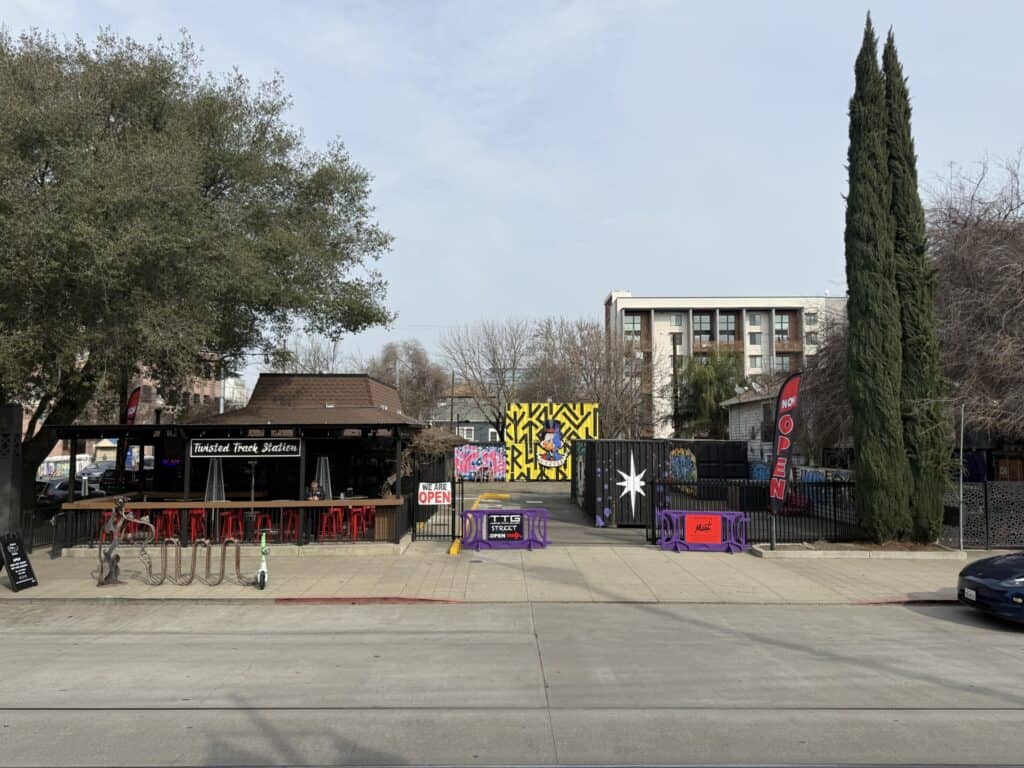
The assemblage supports multiple development strategies, enabling investors to match program, capital stack, and phasing to their specific objectives. Consider the following options:
Mid-Rise Mixed-Use Apartments
A 5-7-story mixed-use building over a podium would combine active ground-floor commercial, restaurant, café, gallery, and neighborhood retail with several levels of apartments above. This is the most straightforward program for the site: Twisted Track’s success confirms F&B viability at this corner, and the city’s by-right pathway for mixed use reduces entitlement risk and shortens the timeline. Upper levels would focus on a mix of studios, one-bedrooms, and efficient two-bedrooms designed for state workers, downtown professionals, and the growing population of creative sector employees who prioritize walkability and transit access over suburban amenities.
Reduced or zero on-site residential parking, enabled by AB 2097 and the RMX-SPD standards, allows a larger share of site area and capital to be directed toward rentable units and amenity programming rather than structured parking. This is the most immediately financeable path for conventional equity and debt, with a strong comp set along R Street and in the Central City.
High-Density Residential (HDR) Emphasis
For sponsors seeking to maximize unit count within the realistic envelope, an HDR-oriented concept would push toward the top of the 3.0–5.0 FAR range with a predominantly residential program and a curated but limited ground-floor commercial footprint. The emphasis is on delivering as many well-designed units as practical within the 90-foot height limit while meeting design and historic context standards.
This path is particularly well-suited for mission-driven and affordable housing developers who can layer tax credits, state infill grants, and local housing funds to achieve deeper affordability and higher density. It also works for market-rate HDR operators who want the critical mass of units necessary to support robust building amenities — roof decks, co-working lounges, fitness facilities, and bike infrastructure — designed expressly for car-light living patterns. As 2040 General Plan amendments come into effect and formal unit caps are removed, the HDR path becomes even more compelling: density becomes a function of design quality and FAR rather than an administrative ceiling.
Mixed-Income / Affordable TOD Community
A mixed-income or fully affordable transit-oriented community would align directly with current state and city housing policy priorities and with the established precedents already delivered on R Street. This concept uses LIHTC, tax-exempt bonds, state infill grant programs, and local housing funds to support substantial density while maintaining long-term affordability covenants and qualifying for public subsidy.
Ground-floor space could be programmed for community-serving uses – small food operators, health clinics, social services, arts and maker spaces – reinforcing a “complete neighborhood” identity rather than a purely market-rate residential model. This scenario is particularly attractive to nonprofit developers, public agencies, mission-driven capital sponsors, and ESG-oriented investors seeking measurable social impact alongside stable, long-term cash flow. Sakura at 16th & T and Monarch at 805 R Street are direct precedents demonstrating that this model is not aspirational on R Street – it is already being executed at scale.
A Boutique Hotel
Imagine a 70-120 key lifestyle hotel that captures Sacramento’s unique legislative, event, and leisure demand in one of the city’s most authentic destinations. R Street’s destination-oriented food and nightlife scene, combined with proximity to the State Capitol, Golden 1 Center, and the Sacramento Convention Center, creates a perfect storm for boutique hospitality.
A 5-8 story building could feature a ground-floor lobby flowing directly into R Street’s activated sidewalk, paired with a restaurant and bar that integrates seamlessly into the corridor’s thriving ecosystem. Upper floors would house guest rooms designed for legislative, government, and corporate demand, while a signature rooftop amenity—bar, pool, or event deck—could serve both guests and the broader neighborhood, generating incremental revenue and reinforcing R Street’s identity as a destination rather than just a pass-through corridor.
Drawing design inspiration from the corridor’s rail and industrial heritage with exposed brick, steel, and integrated art, the property could differentiate itself from standardized flags and command rate premiums as either an independent boutique or a soft-branded lifestyle concept. With existing income covering carrying costs during entitlement and design, and AB 2097 eliminating minimum parking requirements, the economics become increasingly compelling for sponsors seeking to create Sacramento’s next iconic hospitality address.
So we’re curious: What do you think would pencil at 1201 R Street?
A. Hotel
B. Market-rate apartments
C. Condos
D. Mixed-use
E. Office
Let us know, and we will be sure to publish the responses.